
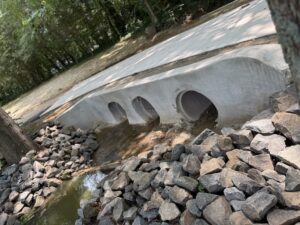
 Water has a way of finding the lowest point on your property, and sometimes that path runs right across your driveway, yard, or access road. When that happens, a culvert can be the simple but essential solution that keeps water flowing where it should while protecting your land from damage. Culverts are often hidden underground, but they play a huge role in preventing erosion, flooding, and costly structural issues.
Whether you’re developing land, improving drainage, or maintaining an existing property, understanding when a culvert is necessary can help you avoid bigger problems down the road.
When Water Needs to Pass Under a Driveway or Road
One of the most common reasons a property needs a culvert is when water must move beneath a driveway, road, or access point. Without a culvert, rainwater and runoff can collect on one side of the driveway and eventually overflow, wash away gravel, or erode the surrounding soil.
A culvert pipe allows water to travel safely underneath the surface, maintaining the natural flow of drainage without damaging the structure above it. This is especially important in areas where stormwater runoff is common or where a drainage ditch runs along a roadway. In many cases, installing a culvert is part of a larger drainage system installation that ensures water moves efficiently through and away from the property.
When Your Yard Experiences Persistent Drainage Problems
If your property regularly develops standing water after rainfall, a culvert may be needed to help redirect that water away from problem areas. Poor drainage can lead to soggy lawns, foundation concerns, soil erosion, and even damage to landscaping.
A properly installed culvert works as part of a larger drainage solution, connecting ditches, swales, or drainage channels so water flows naturally instead of pooling in low spots.
In situations where water flow is blocked by raised areas of land or access paths, a culvert pipe restores the natural path for water to travel. This helps prevent long-term damage while improving the overall usability of your yard.
In some cases, culverts are installed alongside yard drainage solutions to create a more complete system that manages stormwater effectively.
When Land Development or Construction Changes Natural Water Flow
Construction projects, landscaping changes, and new structures can alter the natural flow of water across a property. When land is graded, leveled, or built upon, water often needs a new path to travel.
This is where culverts become essential. They allow water to move beneath driveways, walkways, or access roads that may otherwise block its route.
Culverts are commonly installed during site preparation or excavation services, ensuring drainage is accounted for before construction is completed. By planning for proper water flow early, property owners can avoid drainage issues that might otherwise appear months or even years later.
Culverts may not be the most visible feature on a property, but they are one of the most important tools for managing water safely and effectively. When installed correctly, they help protect your land, maintain proper drainage, and prevent costly damage caused by uncontrolled runoff.
If your Charlotte area property has drainage challenges, a driveway crossing, or areas where water flow is being interrupted, contact us for a free quote.